Best eSIM Data Plans for International Travel in 2025
An eSIM data plan is a digital SIM profile stored directly on your device, replacing the need for a physical plastic card and letting you connect to a mobile network instantly. This built-in technology allows you to activate a data plan by simply scanning a QR code or using an app, making it incredibly easy to get online without waiting for a physical SIM to arrive. The core benefit is that you can instantly switch between different carriers and data packages right from your phone’s settings, perfect for avoiding expensive roaming fees or managing your connectivity on the go.
Understanding the Shift to Digital SIM Technology
Understanding the shift to digital SIM technology means realizing your eSIM data plan lives entirely in software, not on a plastic card. You activate it by scanning a QR code or using an app, swappable in seconds without waiting for a physical delivery. This is crucial for travel: you can install a local eSIM data plan before you even land, keeping your primary line active for calls. The biggest practical change is that you can store multiple plans on one device and switch between them instantly. No more fumbling with tray tools or losing a tiny SIM when changing carriers for better data rates.
How Embedded SIMs Differ from Traditional Plastic Cards
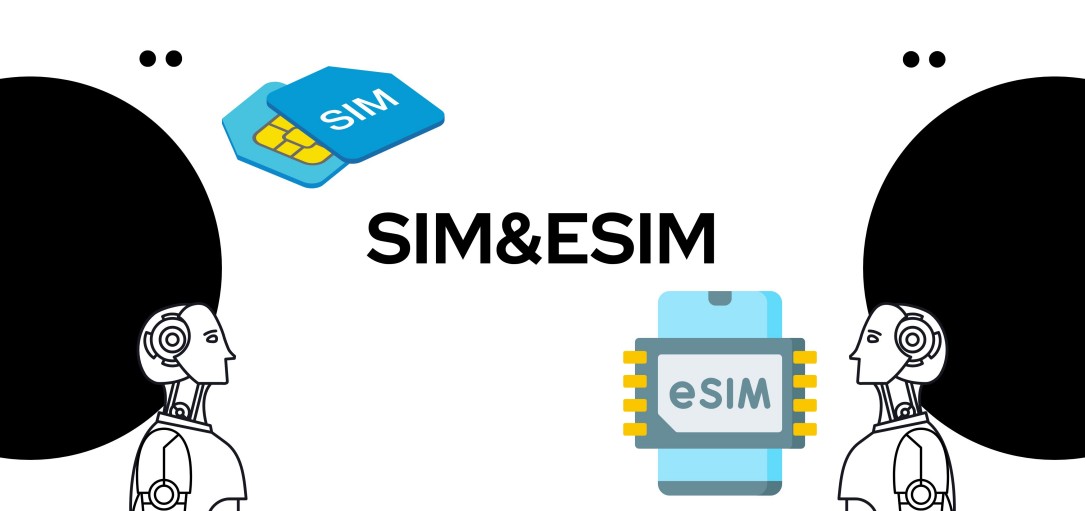
Unlike a traditional plastic SIM card that you physically insert and swap, an embedded SIM (eSIM) is a tiny chip soldered directly into your device’s motherboard. This fundamental change eliminates the need to fumble with different cards when switching providers for an esim data plan. Instead of waiting for a new plastic card to arrive, you activate a data plan digitally by scanning a QR code or using an app. The process follows a clear sequence: first, you purchase a plan online; second, you receive a confirmation with a QR code; third, you scan the code in your device’s settings to instantly download the profile. No physical removal or storage of tiny cards is required.
- Traditional plastic cards require manual insertion, removal, and storage.
- eSIMs are permanently embedded, activated entirely through software.
- Switching between data plans happens instantly via a digital profile, not a physical card swap.
Key Devices That Support This Modern Connectivity
Modern connectivity via eSIM data plans is driven by specific devices designed for this flexibility. Most flagship smartphones like the Apple iPhone (starting from XS/XR) and Google Pixel (from 3a onwards) natively house an eSIM chip. Premium tablets such as the iPad Pro and Samsung Galaxy Tab S series also support multiple eSIM profiles for portable data access. Wearables with onboard cellular capability, like the Apple Watch with Cellular, use eSIM to tether data independently of a paired phone. Not all laptops or basic feature phones currently support this embedded chip, so verifying manufacturer specs is essential. These key devices allow users to switch between data carriers without physically swapping a SIM card.
- Flagship Apple iPhones (XS, 11, 12, 13, 14, 15, 16 series) and Google Pixel smartphones
- Select high-end Samsung Galaxy S and Z Fold/Flip models
- Cellular-enabled iPad and Samsung Galaxy Tab tablets
- Standalone cellular smartwatches like the Apple Watch and Samsung Galaxy Watch
Selecting the Right Mobile Data Package for Travel
Selecting the right eSIM data plan for travel hinges on matching coverage to your specific itinerary. Evaluate regional or global plans; a single-country eSIM often outperforms a broader package in speed and cost, especially for longer stays. Prioritize plans offering immediate activation upon connection to avoid frustrating wait times. Scrutinize data caps versus throttling policies—an unlimited plan with severe slowdowns after 500MB is useless for streaming maps. For seamless use, ensure your eSIM supports tethering and offers a local virtual number for verification texts. Always confirm your device is unlocked and compatible with the provider’s network bands to guarantee a stable, reliable connection.
Short-Term vs. Long-Term Connectivity Options
When evaluating travel needs, the choice between short-term and long-term connectivity options hinges on trip duration and frequency. For a one-to-two-week vacation, a short-term eSIM data plan typically offers high-speed data at a flat rate, avoiding daily top-ups. In contrast, long-term options, spanning a month or more, provide better per-GB value for digital nomads or frequent travelers, though they may cap speeds after a high threshold. A quick comparison highlights practical trade-offs:
| Aspect | Short-Term | Long-Term |
|---|---|---|
| Optimal duration | 1–14 days | 30+ days |
| Cost per GB | Higher | Lower |
| Renewal process | One-time activation | Auto-renewal or manual top-up |
| Data speed consistency | Full speed for set period | Throttled after high-use threshold |
Regional vs. Global Coverage: What Suits Your Itinerary
When picking an eSIM, think about your actual route. A regional eSIM data plan is perfect if you’re island-hopping through Southeast Asia or touring multiple Schengen countries, as it covers a cluster of nations with one affordable package. If your itinerary jumps from Japan to Brazil to Canada, a global plan saves you from juggling five different eSIMs. To decide:
- List every country on your trip—even layovers.
- Check if those countries fall under a single regional zone (like Europe or Asia).
- If not, choose a global plan with universal coverage to avoid dead zones.
Comparing Prepaid, Postpaid, and Pay-As-You-Go Structures
When comparing eSIM data plan structures, the core distinction lies in commitment and control. Prepaid eSIM plans require upfront payment for a fixed data allowance, offering clear budget certainty and zero overage risk, ideal for short trips or secondary lines. Postpaid eSIM plans bill after usage, often bundling larger data pools with multi-device sharing but demanding credit checks and contracts; they suit users with predictable, high consumption. Pay-as-you-go (PAYG) eSIMs charge only for consumed bandwidth, providing maximum flexibility for variable or low usage but at a higher per-GB cost.
For travelers, prepaid eSIMs dominate due to zero setup fees and instant activation; heavy home users benefit from postpaid’s pooled data, while PAYG eSIMs are best for emergency backup or sporadic device use.
Choose based on your data cadence, not perceived savings.
Flexible Top-Up Models and Data Rollover Policies
Flexible top-up models let you add small data packs to your eSIM without committing to a full monthly plan, perfect for topping off when you’re close to your limit. Data rollover policies then save any unused gigabytes from that top-up for the next cycle, so you never waste what you paid for. This combo means you can buy a 5GB pack, use only 3GB, and still have the remaining 2GB carry over. However, rollover limits often cap how much data you can stack, so check your provider’s max carryover before loading multiple packs. Data rollover policies are the key to making these flexible models cost-effective for light or variable users.
Flexible top-ups give you control over spending, while data rollover prevents waste by moving unused data to your next billing period.
Hidden Fees and Fair Usage Policies to Watch For

When choosing an eSIM data plan, scrutinize the fine print on fair usage policies, as hidden fees often lurk in speed throttling after a data cap. Prepaid plans may advertise unlimited data but reduce speeds to 128kbps once a threshold is met, rendering streaming useless. Postpaid contracts might include line activation fees or early termination penalties disguised as “administration costs.” Pay-as-you-go structures can impose per-day minimums even if you use no data. A common yet overlooked charge is a “top-up fee” for adding data mid-cycle, which can exceed the data’s base cost.
Q: What is the most common hidden fee within eSIM fair usage policies?
A: The “restoration fee” to reactivate throttled speeds—often $10 to $20 per gigabyte—is an opaque charge not listed in the plan’s headline price.
Step-by-Step Activation and Installation Process

To activate your eSIM data plan, begin by purchasing and receiving the digital QR code or activation link from your provider. On your device, navigate to Settings, then Cellular or Mobile Data, and select “Add Cellular Plan.” Scan the provided QR code, or tap the link if on a compatible device, to automatically download the profile. Once added, label the plan (e.g., “Travel Data”) and set it as your primary or secondary line for cellular data. Complete the installation process by enabling data roaming in settings if required, then restart your phone. Your eSIM plan is now live, allowing instant connectivity without a physical SIM.
Scanning a QR Code or Manually Entering Details
After purchasing your eSIM data plan, activation begins by scanning the provided QR code using your device’s camera within the cellular settings menu. This automatically downloads and installs the eSIM profile. If scanning fails, you can manually enter the SM-DP+ address and activation code supplied by your carrier, ensuring no typographical errors occur. Both methods trigger the same backend provisioning, immediately making the data plan available for use once the profile is saved. Always verify the QR code matches your specific plan to avoid incorrect setup.
Switching Between Profiles on Dual-SIM Devices
On dual-SIM devices, switching between eSIM data profiles is managed directly within the device’s network settings. Navigate to the cellular or mobile data menu, where each profile is listed with its associated phone number or label. To change the active data line, simply select the desired eSIM profile and designate it as the primary data source. The active profile instantly handles all internet traffic, while the other SIM remains on standby for calls and texts. No physical SIM swap is required; the change applies immediately upon confirmation, allowing seamless transition between a local data plan and a home-country profile.
Optimizing Performance Across Different Networks
An eSIM data plan can automatically scan for the strongest available signal, letting you optimize performance by manually switching to a different local carrier if your current one gets sluggish. To do this, manually select a network in your phone’s cellular settings—this bypasses automatic roaming choices that might stick with a weak tower. Always test speeds right after switching, as some partner networks cap bandwidth, and the strongest signal isn’t always the fastest. For consistent performance, keep your eSIM profile updated through the provider’s app, since outdated profiles can lock you onto congested bands. Also, disable 5G on crowded networks to force a stable 4G LTE connection, which often delivers better real-world speeds in dense areas.
Managing Speed Throttling and Data Prioritization
When your eSIM data plan hits a speed cap, you can still prioritize essential apps to keep things moving. Most eSIM providers let you adjust which services get faster data—temporarily boosting maps or messaging when streaming slows down. Look in your eSIM app for “data priority” or “throttle management” settings; some even let you schedule priority windows during peak hours. Smart throttling means you’ll never be left without navigation, even on a slow connection.
- Set your messaging or navigation app to “high priority” in the eSIM’s data manager.
- Toggle off automatic video streaming to reserve speed for critical tasks.
- Use data saver mode to throttle background apps before they drain your priority allowance.
Using Wi-Fi Calling and Hotspot Features Efficiently
To optimize your eSIM data plan, use Wi-Fi calling to offload voice calls onto stable Wi-Fi networks, preserving your cellular data for critical tasks. For hotspot usage, enable intelligent data sharing by limiting background app refresh on connected devices. A clear sequence ensures efficiency: first, activate Wi-Fi calling in your device’s cellular settings to reduce voice drain; second, set a hotspot data cap in your eSIM app to prevent overuse; third, connect only essential devices to the hotspot. Remember that simultaneous Wi-Fi calling and hotspot tethering can drain battery faster, so monitor power levels. Finally, disable Wi-Fi calling when leaving a high-quality Wi-Fi zone to avoid unnecessary handovers.
Security and Privacy Considerations for Virtual SIMs
Virtual SIMs for eSIM data plans inherently reduce physical SIM theft risk, but your device’s integrity is your strongest privacy gate. The remote provisioning process stores your profile within a secure element, yet a compromised operating system can still expose network identifiers. To safeguard your data, always use device authentication and encrypted VPNs over casual Wi-Fi when activating or using these plans. Remember that while the virtual SIM isolates your number from swapping, service providers can still log your usage metadata. Choosing a provider with a clear, auditable no-logs policy is the single most effective proactive defense for your eSIM-based activity.
Encryption Standards and Remote Deletion Capabilities
Virtual SIMs within an eSIM data plan enforce military-grade AES-256 encryption for all profile data stored on the eUICC chip, ensuring subscriber credentials and authentication keys remain ciphertext even during over-the-air provisioning. Remote deletion capabilities trigger a cryptographic wipe that executes a Secure Channel Protocol (SCP) command to invalidate the digital certificate and erase the profile’s key material from the secure element, rendering the SIM non-functional without physical access. This dual-layer approach isolates data at rest and enables instant asset sanitization upon loss or plan termination.
Encryption standards lock profile data via AES-256, while remote deletion uses cryptographic erasure commands to permanently disable the eSIM profile, ensuring zero residual access after a wipe.
Avoiding Fraudulent Providers and Cloned Profiles
When selecting an eSIM data plan, vetting provider legitimacy is critical to avoid cloned profiles. Always purchase directly from the carrier’s official app or website rather than third-party marketplaces, which often resell fraudulent eSIMs. Verify the provider’s IMSI registration and check for real user reviews focusing on activation issues, as cloned profiles typically fail during network registration. Avoid QR codes shared via unsecured channels like social media or forums, as these can be copies of legitimate profiles. Use a temporary device for initial activation if suspicious, ensuring the eSIM profile does not duplicate your primary identity or leak credentials.
Popular Use Cases Beyond Basic Browsing
An eSIM data plan elevates travel far beyond simple web surfing. You can maintain a persistent WhatsApp or Telegram number for critical two-factor authentication, ensuring secure access to banking or work portals without swapping physical SIMs. For digital nomads, it enables seamless tethering of a laptop to a stable mobile hotspot, powering real-time video conferences from remote locations. Strategic caching of offline maps and cloud-based navigation apps before departure can eliminate roaming anxiety in areas with inconsistent coverage. Additionally, streaming high-resolution media or using real-time translation tools becomes feasible when paired with a high-data local eSIM, removing the need for Wi-Fi dependency.
Streaming, VoIP Calls, and Remote Work on the Go
A robust eSIM data plan transforms your device into a true command center for Streaming, VoIP Calls, and Remote Work on the Go. Stream high-definition video on trains or in airports without buffering, using localized data to bypass throttling. Crystal-clear VoIP calls replace expensive roaming rates, keeping you connected for client meetings from any café. Remote workers can upload large files and join video conferences seamlessly, with multi-network eSIM profiles ensuring stable connectivity even when switching countries.
- Load 4K video instantly via regional data pools optimized for streaming.
- Make uninterrupted Zoom or Skype calls by switching to a local voice-over-IP eSIM profile.
- Upload cloud documents and access VPNs reliably, even from temporary hotspots.
- Seamlessly toggle between home and travel eSIMs to maintain remote desktop sessions.
Connecting IoT Devices and Wearable Gadgets
Connecting IoT devices and wearable gadgets through an eSIM data plan eliminates the need for a physical SIM, enabling seamless network switching for smartwatches, fitness trackers, and environmental sensors. This approach relies on a single, remotely provisioned profile to manage data across multiple compact devices, reducing hardware constraints. For wearables like a GPS watch, the eSIM allows independent cellular connectivity without tethering to a phone. A typical setup involves:
- Activating the eSIM on the device via a QR code or app from the carrier.
- Assigning a shared or dedicated data pool from the existing plan.
- Configuring remote provisioning to automatically select the best network for low-power data bursts.
This ensures consistent connectivity for real-time health metrics or home automation commands, with the embedded SIM architecture simplifying device deployment and management without physical swaps.
Troubleshooting Common Connection Issues
When troubleshooting a failed eSIM data plan connection, begin by toggling Airplane Mode for 30 seconds to force a network re-registration. Verify that the correct eSIM line is selected for cellular data under your device’s mobile network settings. If the connection remains unstable, manually search for and select your carrier’s network operator to bypass auto-selection errors. Restarting the device resolves many temporary provisioning mismatches.
Deleting and reinstalling the eSIM profile via the carrier’s app or QR code is a last resort, as this action consumes a new activation slot and may require additional authorization.
Ensure your device’s carrier settings update is current, as an outdated configuration can block specific bands required by your eSIM data plan.
Resolving Profile Conflicts and Activation Failures
To resolve profile conflicts, first verify that only one eSIM profile is active per device slot, as multiple profiles can cause activation failures. Delete any duplicate or previously used profiles from your device’s eSIM management menu. If activation fails, confirm the QR code or activation code matches the data plan exactly, then manually input the SM-DP+ address if scanning fails. A reboot after deleting conflicting profiles can clear cached network locks that prevent provisioning. For persistent issues, contact your carrier to check for pending profile updates or IMEI mismatches. eSIM data plan activation relies on a clean, singular profile configuration.
Restoring Service After a Network Reset
After initiating a network reset, restoring your eSIM data plan requires re-registering with the carrier, not reinstalling the eSIM profile. First, ensure mobile data is enabled and toggle airplane mode to force a fresh network handshake. If service remains absent, manually re-select your carrier under network operators. Re-activating the eSIM data plan via your device’s cellular settings often triggers the necessary provisioning update. Unlike a physical SIM, an eSIM’s embedded credentials persist through resets, so verification is usually the only hurdle. A consistent APN configuration must also be confirmed.
- Re-activate the eSIM profile from the cellular settings menu
- Toggle airplane mode for 30 seconds to force network registration
- Verify the correct APN is set for your eSIM data plan
- Manually select your home network if auto-selection fails
Future Trends in Digital Subscriber Identity Modules

Future Digital Subscriber Identity Modules will make eSIM data plans fully dynamic, letting you switch between carrier profiles on the fly without any app or QR code. Plans will integrate directly with your device’s OS, offering real-time data pooling across multiple SIM slots. Q: Will a future eSIM data plan allow me to rent unused data permanently? A: Likely no—leases will expire, but you might trade surplus data with friends via peer-to-peer token systems built into the SIM module.
Carrier Agnostic Plans and Multi-Network Aggregation
Carrier Agnostic Plans allow users to subscribe to a single eSIM data plan that is not locked to any specific network operator. Through Multi-Network Aggregation, the eSIM dynamically connects to multiple available networks simultaneously, bonding their bandwidth for a unified, faster data session. This aggregation actively switches traffic in real-time to the strongest signal, mitigating dead zones. A practical sequence for activation is:
- Purchase a carrier-agnostic eSIM plan from a provider aggregating multiple networks.
- Install the eSIM profile, which enables the device to scan and negotiate UK eSIM access with all partner networks.
- The eSIM’s dynamic multi-network load balancing then distributes your data packets across the best available connections, optimizing speed and latency without manual switching.
Integration with Smart City Infrastructure and 5G Evolution
eSIM data plans are central to integration with smart city and 5G evolution, enabling seamless device-to-infrastructure authentication without physical SIM swaps. As 5G networks deploy dense small cells, an eSIM profile can automatically switch between a city’s public transport Wi-Fi, traffic sensors, and private vehicular networks. The sequence for a connected car includes:
- the eSIM authenticates against a city’s network slicing gateway for low-latency traffic control.
- it re-provisions a secondary profile for parking meter payment via urban mesh networks.
- the profile dynamically adjusts data prioritization for emergency vehicle preemption signals.
This removes manual configuration while ensuring consistent bandwidth for real-time infrastructure interactions.
What Exactly Is an eSIM Data Plan and How Is It Different from a Physical SIM